


Personal
Business
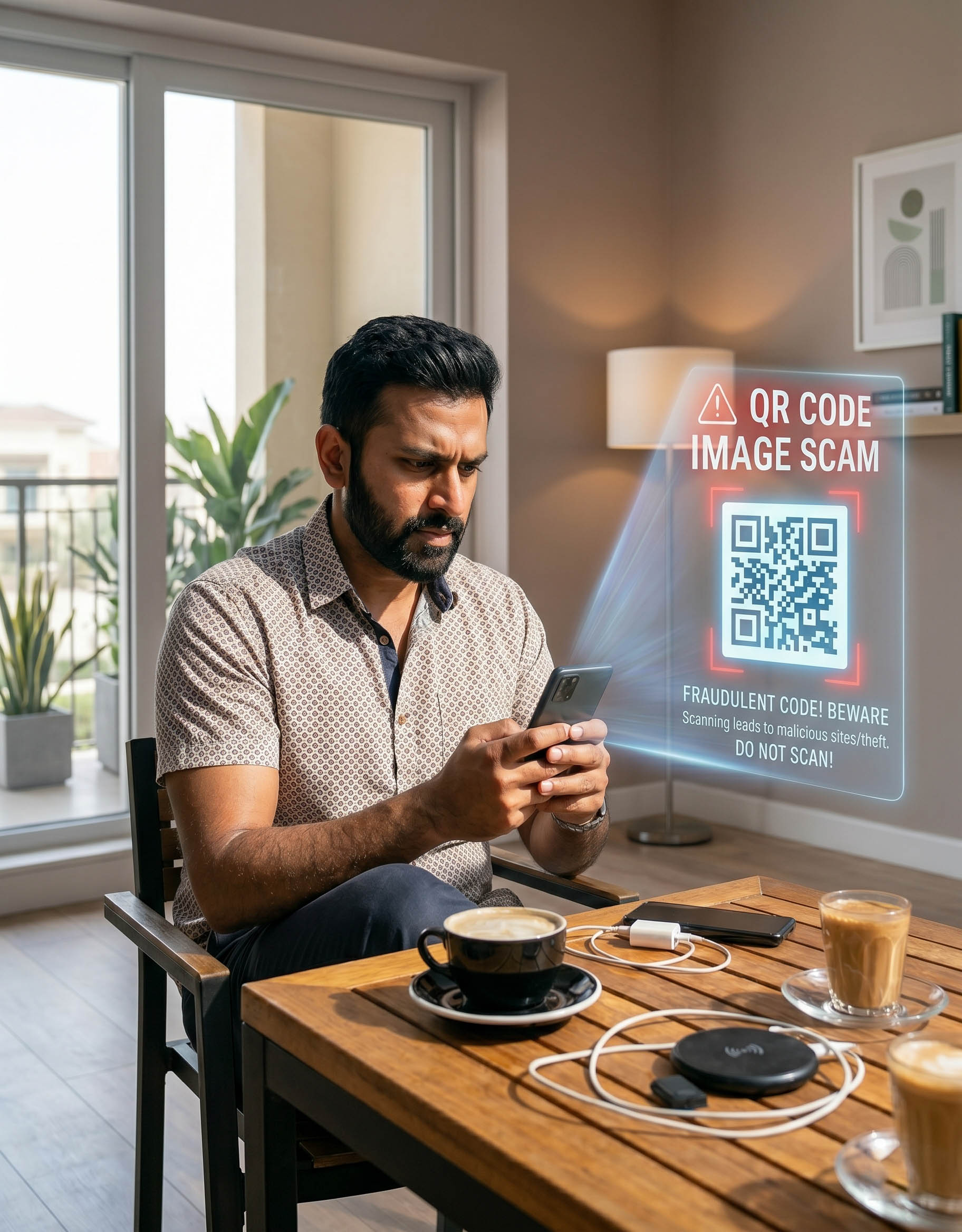
QR codes have become an essential part of everyday life in the UAE. From making payments and accessing restaurant menus to claiming offers and receiving deliveries, they provide a quick and convenient way to access information. However, as QR code usage continues to grow, fraudsters are finding new ways to misuse this technology to steal personal and financial information. Understanding how these scams work can help you stay one step ahead.
What Is a QR Code Scam?
A QR code scam, sometimes referred to as “quishing” (QR phishing), occurs when Fraudsters use fake or manipulated QR codes to direct people to fraudulent websites or payment pages.
Once scanned, these QR codes may:
Lead you to a fake website that looks legitimate.
Request your banking or personal information.
Trick you into authorizing payments to fraudsters.
Prompt you to download malicious software onto your device.
Ask for passwords, OTPs, or card details under false pretences.
Because QR codes hide the destination URL until they are scanned, it can be difficult to immediately recognize a fraudulent link.
Common QR Code Scams in the UAE
Fake Payment QR Codes
Fraudsters may replace legitimate payment QR codes with fake ones in shops, parking areas, or public spaces. Customers who scan the code may unknowingly send money to a fraudster instead of the intended merchant.
Fraudulent Promotional Offers
You may receive QR code via email, SMS, or social media claiming that you have won a prize or are eligible for a special offer. Scanning the code may direct you to a fake website designed to collect your personal information.
Delivery and Courier Scams
Scammers sometimes impersonate courier companies and send QR codes requesting payment for a delivery fee or customs charge. These codes may lead to fraudulent payment pages.
Banking and Account Verification Scams
Fraudsters may pretend to represent banks or government entities and ask customers to scan a QR code to verify their account details. Legitimate institutions will not ask you to share passwords, OTPs, or confidential information through QR codes.
Warning Signs to Watch Out For
Being aware of common red flags can help you identify a potential scam.
The QR Code Comes from an Unsolicited Message
Be cautious if you receive QR codes unexpectedly through email, text messages, WhatsApp, or social media.
The Website Address Looks Suspicious
After scanning a QR code, always review the web address carefully. Watch for spelling mistakes, unusual characters, or websites that do not match the organization’s official domain.
The QR Code Appears Tampered With
In public places, inspect QR code stickers carefully. Fraudsters place fake stickers over genuine QR codes.
You Are Asked for Sensitive Information
Legitimate organizations will never ask you to share:
One-Time Passwords (OTPs)
Online banking passwords
Card PINs
CVV numbers
Full card details
If a QR code leads to a page requesting such information, stop immediately.
How to Protect Yourself
Scan QR Codes Only from Trusted Sources
Only use QR codes provided by recognized businesses, official websites, or verified communication channels.
Verify Payment Details Before Confirming
Always check the recipient’s name and payment amount before completing any transaction.
Preview the Link Before Opening It
Many smartphones display the destination URL before opening the website. Take a few seconds to review the address and confirm it looks genuine.
Avoid Scanning Random QR Codes
Do not scan QR codes received from unknown individuals or found in suspicious locations.
Keep Your Device Updated
Regular software updates can help protect your smartphone from malware and security vulnerabilities.
When in Doubt, Use Official Channels
If you are unsure whether a QR code is genuine, visit the organization’s official website or contact them directly using verified contact details.
What Should You Do If You Suspect a Scam?
If you believe you may have scanned a fraudulent QR code:
Stay Alert and Stay Secure
Technology makes everyday transactions easier, but it is important to remain vigilant. Taking a few extra seconds to verify a QR code before scanning can help protect your personal and financial information.
At Deem, we encourage customers to stay informed about emerging fraud trends and adopt safe digital practices to help safeguard their finances.


© All rights reserved 2026 Deem Finance LLC. Deem Finance LLC (Deem) is regulated by Central Bank of the UAE.