


Personal
Business
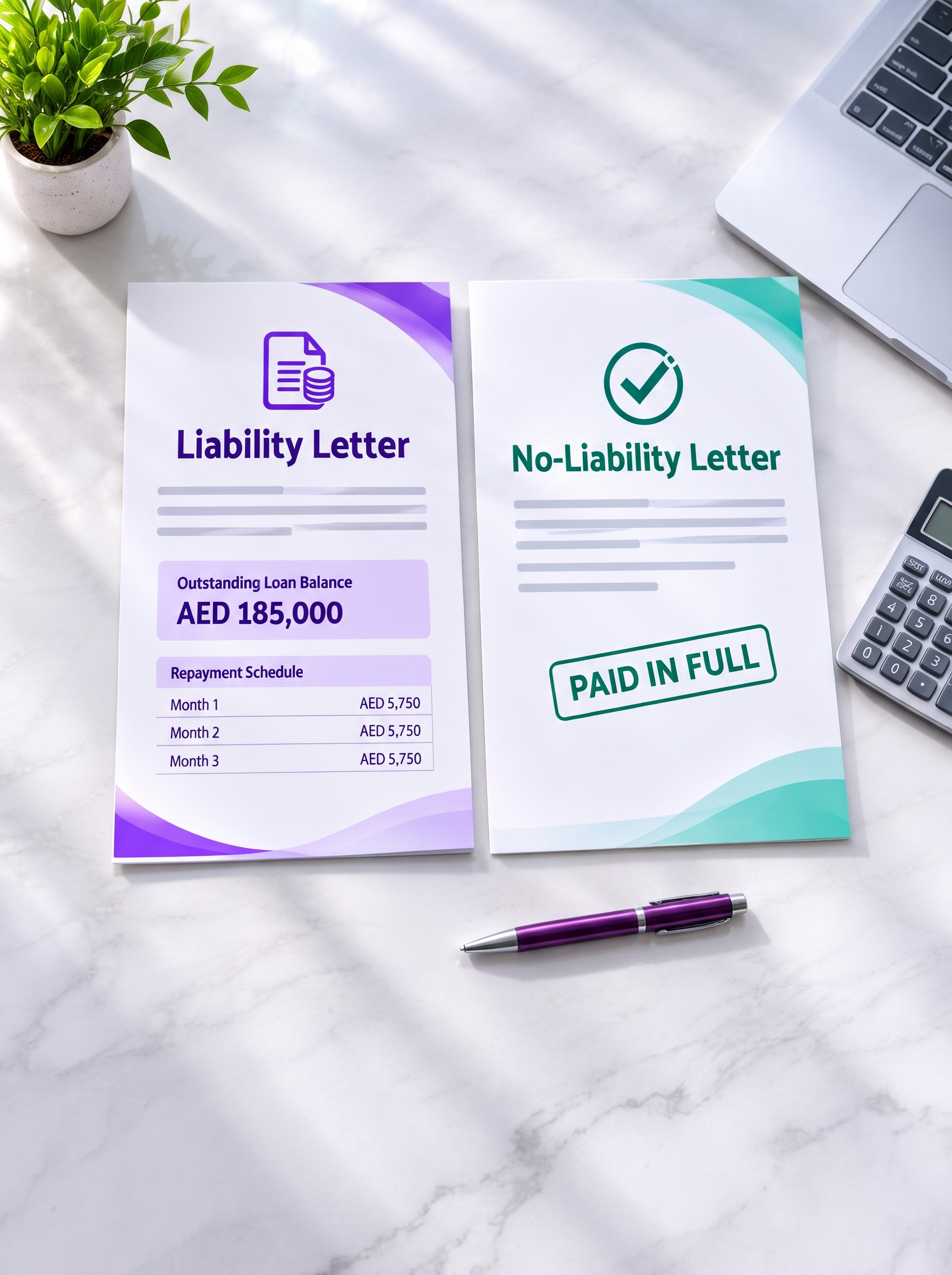
If you’re applying for a new loan, transferring an existing loan to another bank or settling your financial obligations, you may be asked to provide a liability letter or a no-liability letter. While both documents are issued by banks and financial institutions, they serve different purposes.
A liability letter confirms how much you currently owe, while a no-liability letter confirms that you have no outstanding financial obligations with the issuing institution.
Understanding the difference can help you request the right document and avoid unnecessary delays when managing your finances in the UAE.
What Is a Liability Letter in the UAE?
A liability letter is an official document issued by a bank or financial institution that outlines the outstanding debts and financial obligations of an individual or company with that institution.
Simply put, it provides a summary of how much you currently owe on financial products such as personal loans, credit cards or other credit facilities. The letter typically includes details of outstanding balances and may also specify the amounts required to settle these obligations.
In the UAE, a liability letter is commonly requested when transferring a loan to another bank, applying for additional financing or reviewing existing financial commitments.
What Is a No-Liability Letter?
A no-liability letter, also known as a no-liability certificate, is an official document issued by a bank or financial institution confirming that an individual or company has no outstanding debts or financial obligations with that institution.
Simply put, it serves as proof that you do not owe any money to the issuing bank or financial institution for the accounts or facilities covered by the letter.
A no-liability letter is commonly requested when applying for new financing, confirming that financial obligations have been fully settled or completing certain financial procedures.
What Is the Difference Between a Liability Letter and a No-Liability Letter?
The main difference between these two documents is the financial information they confirm.
A liability letter shows your existing financial obligations, including outstanding loan or credit card balances. It helps the receiving bank or financial institution understand how much you currently owe.
A no-liability letter, on the other hand, confirms that you have no outstanding financial obligations with the issuing institution, as specified in the letter.
For example, if you’re transferring a personal loan to another bank, you may first need a liability letter showing your outstanding loan balance. Once your financial obligations with the previous lender have been fully settled, you may request a no-liability letter to confirm that no amount remains outstanding.
When Might You Need a Liability or No-Liability Letter?
There are several situations where a bank or financial institution may request one of these documents.
When transferring a loan to another bank
If you’re moving your personal loan to another bank in the UAE, the new lender may request a liability letter to confirm your outstanding balance and existing financial commitments.
After settling your financial obligations
Once you have fully repaid your outstanding debts with a financial institution, you may request a no-liability letter confirming that no financial obligations remain.
When applying for additional financing
A bank or financial institution may request a liability or no-liability letter to assess your existing financial commitments before approving a new loan or other credit facility.
When confirming the settlement of a loan or credit card
If you have settled a particular loan or credit card but still hold other financial products with the same institution, you may need a settlement or clearance letter rather than a no-liability letter.
What Information Is Usually Included in a Liability Letter?
A liability letter generally provides details of your outstanding financial commitments with the issuing bank or financial institution.
Depending on the financial products covered, the letter may include:
Before submitting the letter, ensure that the information is accurate and up to date.
For a personal loan, check whether the outstanding amount includes any applicable interest or early settlement charges.
For a credit card, verify the outstanding balance, which is different from your credit limit.
If you have multiple financial products, confirm that the letter covers the obligations requested by the receiving institution.
How to Request a Liability or No-Liability Letter at Deem
If you have a Deem Personal Loan or Deem Credit Card, you can request the appropriate letter by following these steps.
Step 1: Confirm which letter you need
Check with the bank or organisation requesting the document whether you need a liability letter, no-liability letter or settlement confirmation. Confirm which financial products should be covered and whether the letter needs to be addressed to a specific recipient.
Step 2: Contact Deem Customer Care
Call 600 525550 or visit the Deem Contact Us page for assistance with your request. The team can guide you on the applicable requirements.
Step 3: Check the applicable fees
Fees may apply depending on the type of letter requested. Refer to Deem’s Schedule of Fees and Charges for details.
Step 4: Review your letter
Once received, verify your personal information, the date of issue, the financial products covered and any outstanding amounts before submitting it to the requesting institution. If any information appears incorrect, contact Deem for clarification.
Frequently Asked Questions
A liability letter confirms your outstanding debts and financial obligations with a bank or financial institution. A no-liability letter confirms that you have no outstanding financial obligations with that institution for the accounts or facilities covered by the letter.
You may need a liability letter when transferring an existing loan to another bank, applying for additional financing or providing proof of your current financial commitments.
Yes, provided you have fully settled the financial obligations covered by the letter. If you still have outstanding balances on other products with the same institution, you may need a settlement or clearance letter for the specific loan or credit card instead.
Under Clause 7.1.1.9 of the Central Bank of the UAE Consumer Protection Standards, licensed financial institutions are required to issue the applicable liability or no-liability letter within seven complete business days of a consumer’s request.
Not necessarily. A no-liability letter generally confirms that you have no outstanding financial obligations with the issuing institution, while a clearance letter typically confirms that a specific loan or credit facility has been settled. The document required depends on the receiving institution’s requirements.
Banks and financial institutions may charge a fee for issuing these letters. Charges can vary depending on the institution and financial product. For Deem Personal Loans and Credit Cards, refer to Deem’s Schedule of Fees and Charges for the applicable charges.
The validity period may vary depending on the issuing bank or financial institution. Since outstanding balances can change due to repayments, interest or other charges, always check the letter’s validity period and confirm the receiving institution’s requirements before submitting it.


© All rights reserved 2026 Deem Finance LLC. Deem Finance LLC (Deem) is regulated by Central Bank of the UAE.