


Personal
Business
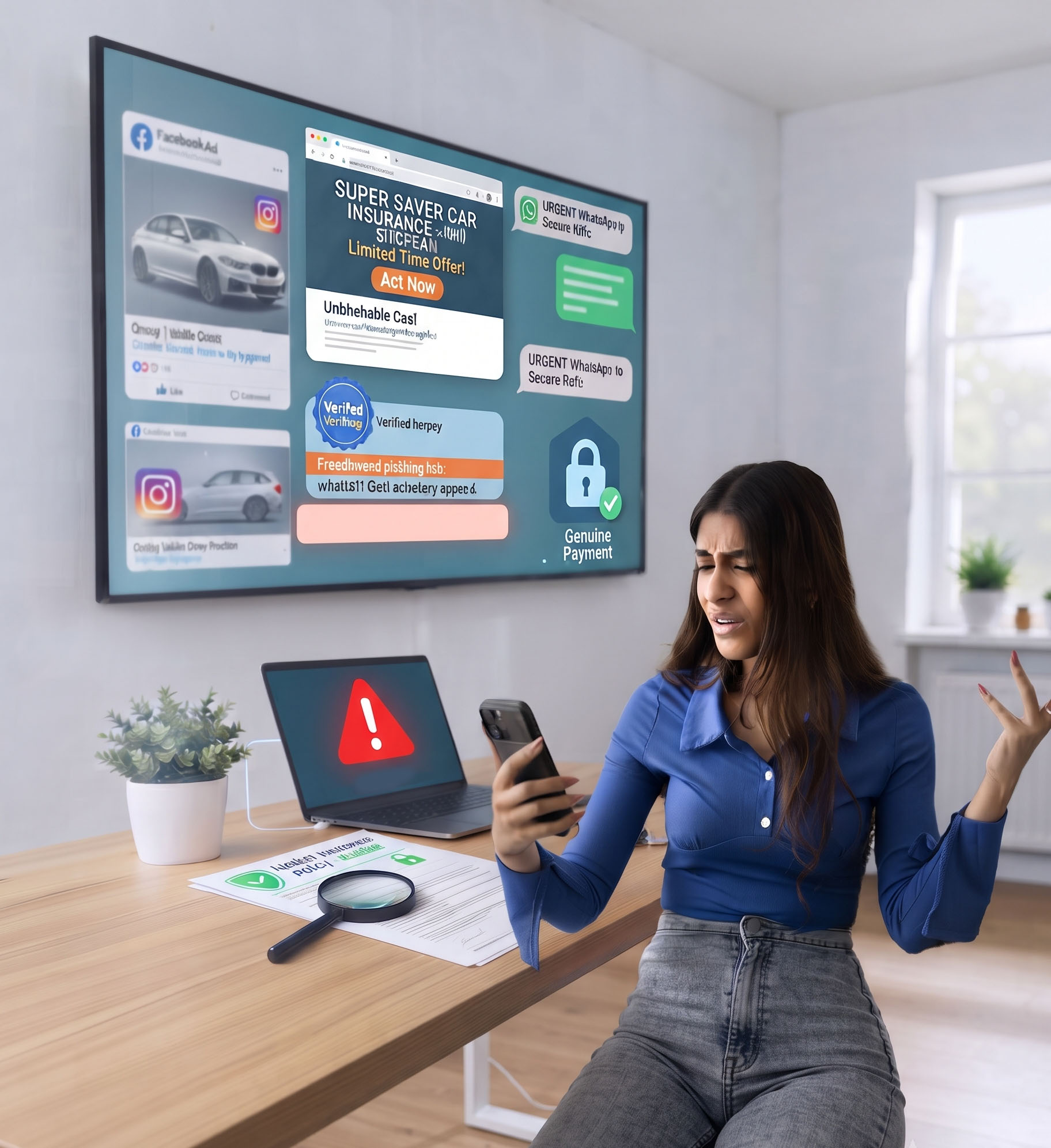
Think Before You Pay: A Low-Cost Insurance Deal Could Be a Scam
As more services become available online, fraudsters are finding new ways to target consumers through digital platforms. One increasingly common scam involves fake vehicle insurance offers, where fraudsters pose as insurance companies or brokers and advertise policies at unusually low prices.
These scams often appear through social media advertisements, messages, or fraudulent websites promoting attractive insurance deals. Their goal is to convince you to make an advance payment for a policy that does not exist—or provide documents that appear genuine but offer no valid insurance coverage.
Understanding how these scams work and recognising the warning signs can help protect your personal and financial information.
How Do Fake Insurance Scams Work?
Fraudsters typically use several tactics to make their offers appear genuine:
1. Prices That Seem Too Good to Be True
Fraudsters advertise vehicle insurance policies at prices significantly below standard market rates. They may also create urgency by claiming the discount is available for a limited time or only to a small number of customers.
2. Fake Websites and Social Media Profiles
Fraudsters may create websites, social media accounts, or advertisements that closely resemble those of legitimate insurance providers. They may use company logos, professional designs, and fake customer reviews to appear trustworthy.
3. Requests for Advance Payment
Once you express interest, the fraudster may ask you to transfer money before issuing the policy. After receiving the payment, they may stop responding or provide fake documents that are not issued by a licensed insurance provider.
Common Warning Signs of an Insurance Scam
Stay alert if you notice any of the following:
Unusually Low Prices
If an insurance offer is significantly cheaper than other available options, take time to verify the provider and policy before making any payment.
Pressure to Pay Immediately
Fraudsters often create a false sense of urgency by claiming the offer will expire soon or that immediate payment is required to secure the price.
Unverified Sellers
Be cautious when dealing with unknown individuals, unofficial social media accounts, or websites that do not provide clear and verifiable company information.
Requests for Sensitive Information
Never share your card PIN, CVV, OTP, passwords, or banking credentials with anyone. Be cautious about sharing personal documents unless you have verified the recipient and understand why the information is required.
How to Protect Yourself from Fake Insurance Scams
Follow these simple precautions before purchasing an insurance policy online:
✔ Verify Before You Pay
Confirm that the insurance company or broker is licensed and authorised to operate in the UAE. Use independently verified contact details to confirm that the offer and representative are genuine.
✔ Use Official Channels
Purchase insurance only through the provider’s official website, authorised digital platforms, or other trusted channels.
✔ Avoid Suspicious Links
Do not click on links received through unsolicited messages, emails, or social media advertisements. Instead, visit the provider’s official website directly.
✔ Protect Your Financial Information
Deem will never ask you to share your OTP, PIN, CVV, password, or full card details through a phone call, email, SMS, or WhatsApp message.
✔ Review the Offer Carefully
Take time to understand the policy coverage, exclusions, terms, and payment details. A genuine provider will allow you to review the information before making a decision.
Stay One Step Ahead of Fraudsters
Online scams are becoming increasingly convincing, but a few simple precautions can help you stay protected. Always verify the provider, use official channels, and keep your personal and financial information secure.
At Deem, your security is our priority. We encourage you to stay informed, remain cautious, and practise safe digital habits when managing your finances.
Remember: If an offer seems too good to be true, pause and verify before you act.
FAQs
How can I identify a fake insurance offer?
Fake insurance offers often involve unusually low prices, pressure to pay immediately, unverified sellers, suspicious links, or requests for confidential information. Always verify the provider and policy before making a payment.
Can I trust insurance offers shared through social media?
Not every offer promoted on social media is fraudulent. However, you should independently verify the provider’s official credentials and contact details before sharing information or making a payment.
What information should I never share?
Never share your OTP, card PIN, CVV, passwords, or banking credentials with anyone. Deem will not ask you to disclose this information through phone calls, SMS, email, or WhatsApp.
What should I do if I suspect fraud?
Stop communicating with the sender, do not make any further payments, and do not click on links or share additional information. Report the incident to the relevant official authorities. If your Deem card or account information may have been compromised, contact Deem Customer Care immediately on 600 525550.


© All rights reserved 2026 Deem Finance LLC. Deem Finance LLC (Deem) is regulated by Central Bank of the UAE.